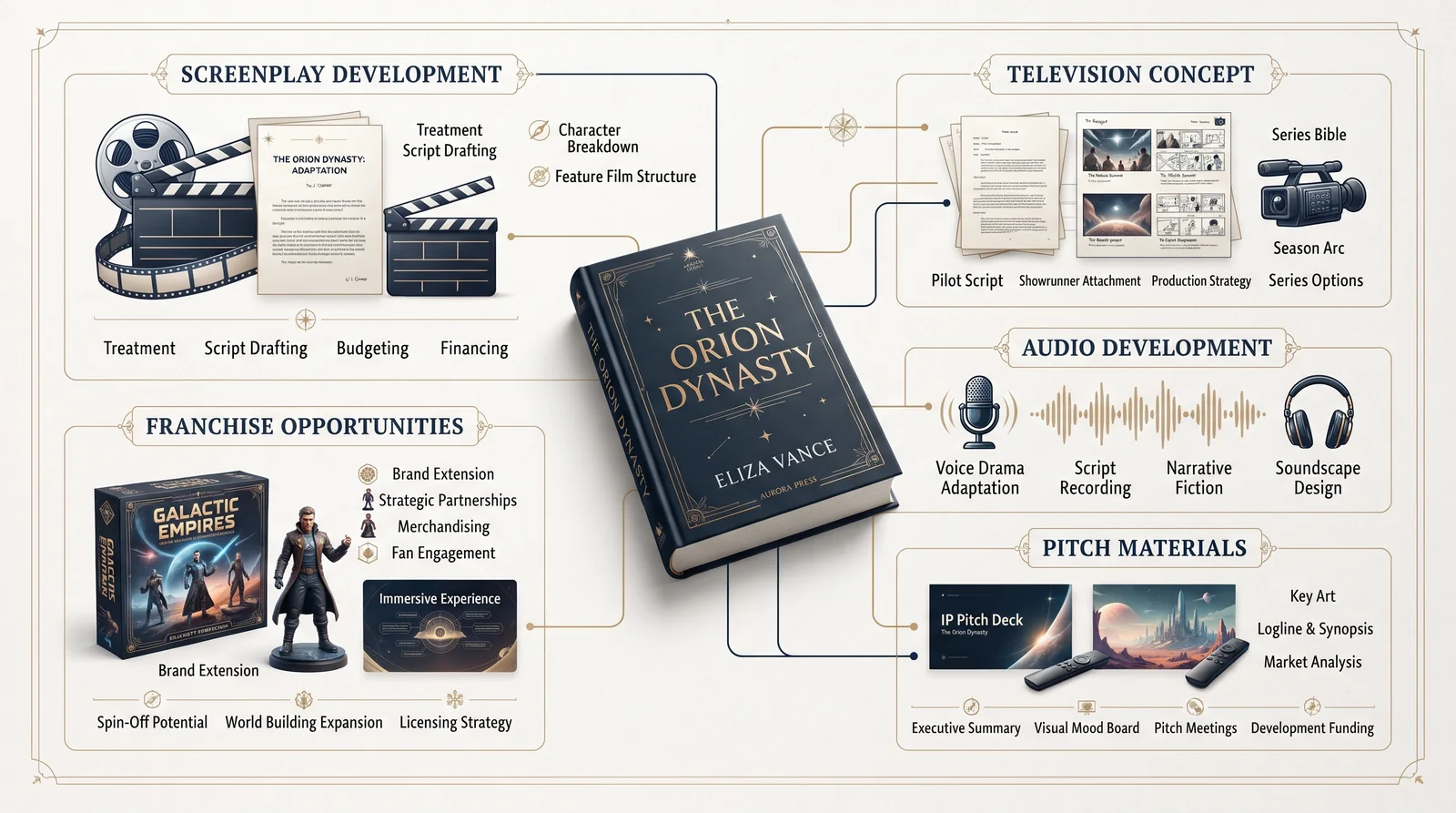
In the modern media landscape, the boundary between the bookshelf and the streaming queue has effectively vanished. We are living in the era of IP Maximization, where a publisher’s most valuable asset is the underlying Intellectual Property (IP) of a book and its potential for cinematic adaptation.
However, a significant gap remains. Most publishing houses and agencies possess the rights but lack the dedicated resources to translate those rights into the technical formats Hollywood demands.
For publishers, developing screen opportunities requires more than identifying books with strong stories. The rights position, adaptation potential, source material, target format, development requirements, and potential buyers all need to be considered before significant resources are committed.
The Change from “Book” to “Asset”
Historically, publishers waited for Hollywood to come knocking. Today, the most successful rights holders are proactive. To move a title to the top of a producer’s pile, you need more than a manuscript; you need a Sales Kit.
By providing authors with professional Book Coverage, Treatments, and Screenplays, publishers can present a turnkey solution to studios. This increases the chances of an option deal, and also the value of the rights themselves.
What Should Publishers Evaluate Before Developing a Book for Film or Television?
A strong book does not automatically make a strong screen property. Publishers evaluating their catalogue should consider several factors.
- Story potential: Does the book contain a central conflict or premise that can sustain a film or series?
- Character potential: Are there characters whose goals, relationships, and conflicts can translate effectively to screen?
- Format: Is the material better suited to a feature film, limited series, ongoing series, documentary, or another format?
- Audience: Does the source material have a clearly identifiable audience or existing readership?
- Adaptation complexity: How much of the original material would need to be condensed, reorganized, or substantially transformed?
- Rights position: Are the necessary adaptation and related rights available, and who controls them?
These questions can help publishers distinguish between books that are simply popular and books that may have meaningful screen-development potential.
Building a Film and Television Development Strategy
Publishers do not necessarily need to approach every title in their catalogue in the same way.
A practical development strategy can begin by identifying a smaller group of titles with strong adaptation potential. Those titles can then be assessed more deeply to determine the appropriate format, development requirements, and next steps.
This approach allows a publisher to treat screen development as a selective rights strategy rather than assuming that every successful book should be adapted.
Why Development Materials Matter
When approaching film and television professionals, a publisher may need more than the original book and a description of its commercial performance.
Depending on the project, useful development materials can include an adaptation assessment, treatment, screenplay, pitch materials, character information, and other documents that help a potential producer understand how the property could work on screen.
The appropriate materials depend on the stage of development and the type of project being presented.
Turning a Publishing Catalogue Into a Screen Development Opportunity
The first step is not adapting every promising title. It is identifying which properties have the strongest potential and determining what kind of screen project they could become.
For publishers considering this strategy, a structured assessment of the catalogue can help identify which books warrant further development.
If your publishing company is looking for professional support developing literary properties for film or television, you can learn more about ScreenwritePro’s Publisher Services.