
We are living in the golden age of non-fiction. From investigative docuseries that dominate the Netflix “Top 10” to prestige feature documentaries that win Academy Awards, the demand for truth-based storytelling has never been higher.
However, many filmmakers make the mistake of thinking that because a story is true, it will naturally find its own structure. They pick up a camera, capture 200 hours of footage, and then get lost in the edit cave for two years trying to find the movie.
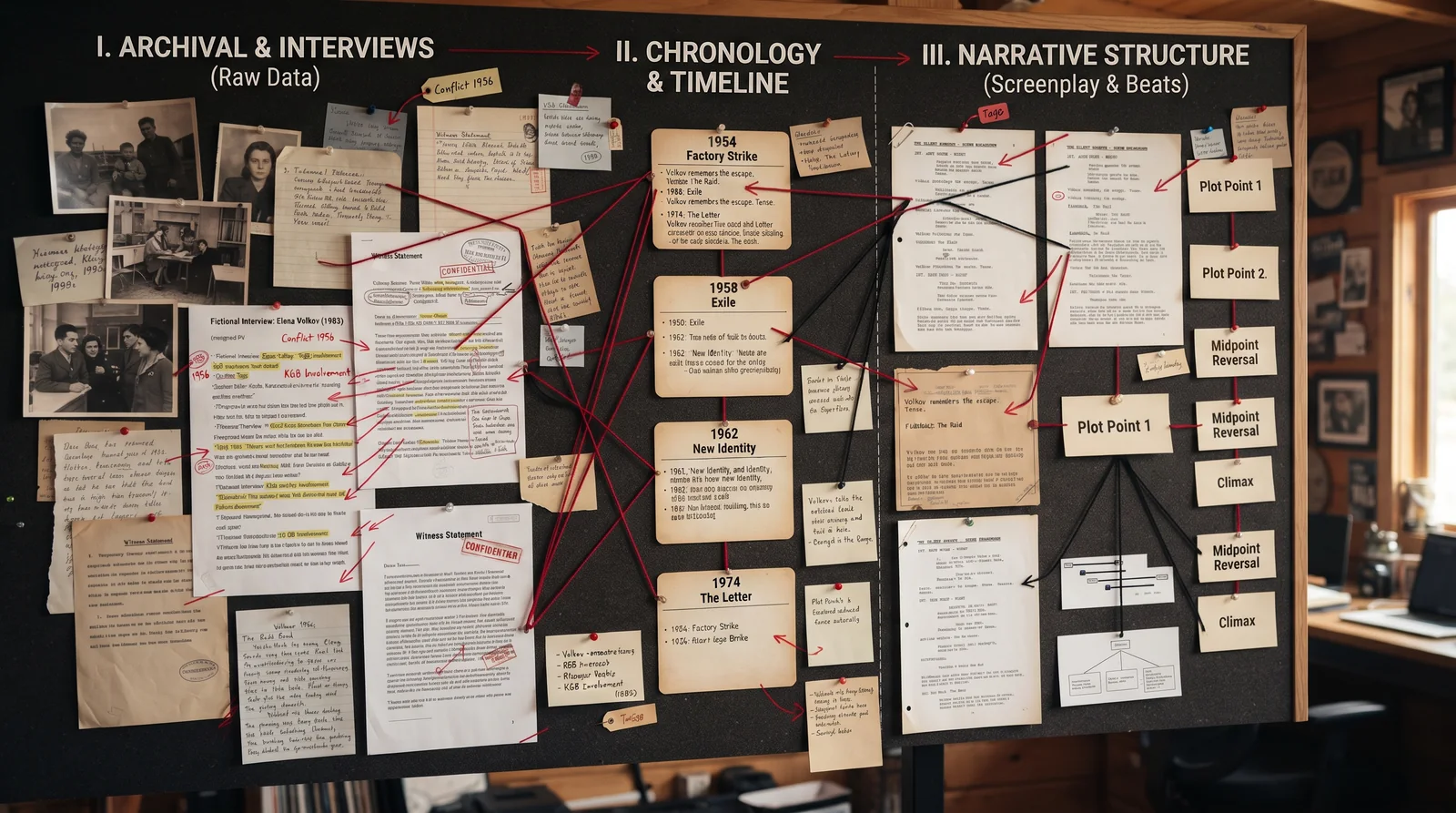
Documentary storytelling often requires significant narrative planning before the final story is assembled. Research, interviews, archival material, location footage, and other sources may contain more information than can ultimately appear in the finished project.
The development process helps determine what the central story is, which material supports it, and how the available information can be organized into a coherent viewing experience.
Why Documentaries Need Narrative Structure
A documentary can be factually accurate while still requiring deliberate narrative structure.
Research and interviews provide information, but information alone does not determine how an audience experiences a story. Development work can help identify the central question, major characters or subjects, important turning points, relevant evidence, and the order in which information should be revealed.
The exact development document used depends on the project. A treatment, outline, paper edit, shooting script, or post-production script can serve different purposes at different stages.
What Is a Documentary Treatment?
A documentary treatment is a development document that explains the proposed story and how it may be presented on screen.
Depending on the project, it can describe the central premise, subjects or characters, narrative approach, visual style, tone, research, access, and potential story progression.
The exact length and contents vary by project and by the stage of development. A treatment prepared for pitching may serve a different purpose from a document used internally while developing a project.
The Docuseries Revolution: Writing for the “Binge”
The biggest change in the industry is the move toward serialized non-fiction. To sell a docuseries to a major streamer like HBO or Netflix, you have to prove that your story can sustain 4 to 8 episodes of momentum.
Our development process for docuseries focuses on the “Hook-and-Payoff” model. We help you structure your factual material so that every episode ends with the tension required to keep the viewer hitting Next Episode.
What Happens When the Source Material Is a Book or Existing Research?
Documentary projects may originate from books, journalism, interviews, investigations, archival collections, personal experiences, or other source material.
When substantial source material already exists, development involves determining which information belongs in the screen story and how the material can be organized into a coherent narrative.
This is particularly important for projects based on complex research, where the amount of available information can make the central story difficult to identify.
Planning Before Production
The purpose of documentary development is not to predetermine every moment that will eventually appear in the finished film. Real-world events can change, interviews can reveal unexpected information, and new material can alter the direction of a project.
Planning provides a framework for making those decisions.
Whether a project is still based primarily on research or already contains substantial footage, the appropriate development document can help clarify the story and guide the next stage of production or post-production.
If you need professional help developing a documentary project, you can learn more about ScreenwritePro’s Documentary Development Services.